

Group A
| # | Team | P | W | D | L | GD | Pts |
|---|---|---|---|---|---|---|---|
| 1 |  Mexico Mexico | 2 | 2 | 0 | 0 | +3 | 6 |
| 2 |  South Korea South Korea | 2 | 1 | 0 | 1 | 0 | 3 |
| 3 |  Czechia Czechia | 2 | 0 | 1 | 1 | -1 | 1 |
| 4 |  South Africa South Africa | 2 | 0 | 1 | 1 | -2 | 1 |
Group B
| # | Team | P | W | D | L | GD | Pts |
|---|---|---|---|---|---|---|---|
| 1 |  Canada Canada | 2 | 1 | 1 | 0 | +6 | 4 |
| 2 |  Switzerland Switzerland | 2 | 1 | 1 | 0 | +3 | 4 |
| 3 |  Bosnia & Herzegovina Bosnia & Herzegovina | 2 | 0 | 1 | 1 | -3 | 1 |
| 4 |  Qatar Qatar | 2 | 0 | 1 | 1 | -6 | 1 |
Group E
| # | Team | P | W | D | L | GD | Pts |
|---|---|---|---|---|---|---|---|
| 1 |  Germany Germany | 2 | 2 | 0 | 0 | +7 | 6 |
| 2 |  Ivory Coast Ivory Coast | 2 | 1 | 0 | 1 | 0 | 3 |
| 3 |  Ecuador Ecuador | 2 | 0 | 1 | 1 | -1 | 1 |
| 4 |  Curaçao Curaçao | 2 | 0 | 1 | 1 | -6 | 1 |
Group F
| # | Team | P | W | D | L | GD | Pts |
|---|---|---|---|---|---|---|---|
| 1 |  Netherlands Netherlands | 2 | 1 | 1 | 0 | +4 | 4 |
| 2 |  Sweden Sweden | 2 | 1 | 0 | 1 | 0 | 3 |
| 3 |  Japan Japan | 1 | 0 | 1 | 0 | 0 | 1 |
| 4 |  Tunisia Tunisia | 1 | 0 | 0 | 1 | -4 | 0 |
Group G
| # | Team | P | W | D | L | GD | Pts |
|---|---|---|---|---|---|---|---|
| 1 |  Iran Iran | 1 | 0 | 1 | 0 | 0 | 1 |
| 2 |  New Zealand New Zealand | 1 | 0 | 1 | 0 | 0 | 1 |
| 3 |  Belgium Belgium | 1 | 0 | 1 | 0 | 0 | 1 |
| 4 |  Egypt Egypt | 1 | 0 | 1 | 0 | 0 | 1 |
Group H
| # | Team | P | W | D | L | GD | Pts |
|---|---|---|---|---|---|---|---|
| 1 |  Saudi Arabia Saudi Arabia | 1 | 0 | 1 | 0 | 0 | 1 |
| 2 |  Uruguay Uruguay | 1 | 0 | 1 | 0 | 0 | 1 |
| 3 |  Cape Verde Islands Cape Verde Islands | 1 | 0 | 1 | 0 | 0 | 1 |
| 4 |  Spain Spain | 1 | 0 | 1 | 0 | 0 | 1 |
Group K
| # | Team | P | W | D | L | GD | Pts |
|---|---|---|---|---|---|---|---|
| 1 |  Colombia Colombia | 1 | 1 | 0 | 0 | +2 | 3 |
| 2 |  Congo DR Congo DR | 1 | 0 | 1 | 0 | 0 | 1 |
| 3 |  Portugal Portugal | 1 | 0 | 1 | 0 | 0 | 1 |
| 4 |  Uzbekistan Uzbekistan | 1 | 0 | 0 | 1 | -2 | 0 |
Results & fixtures
Ecuador0Curaçao0Germany2Ivory Coast1Netherlands5Sweden1 Türkiye0
 Paraguay1
 Brazil3
 Haiti0
 Scotland0
 Morocco1
 USA2
USA2 Australia0Mexico1South Korea0Canada6Qatar0Switzerland4Bosnia & Herzegovina1Czechia1South Africa1Uzbekistan1Colombia3
 Ghana1
 Panama0
 England4
 Croatia2Portugal1Congo DR1
 Austria3
 Jordan1
 Argentina3
 Algeria0
 Iraq1
Iraq1 Norway4
 France3
 Senegal1Iran2New Zealand2Saudi Arabia1Uruguay1Belgium1Egypt1Spain0Cape Verde Islands0Sweden5Tunisia1Ivory Coast1Ecuador0Netherlands2Japan2Germany7Curaçao1Australia2Türkiye0Haiti0Scotland1Brazil1Morocco1Qatar1Switzerland1USA4Paraguay1Canada1Bosnia & Herzegovina1South Korea2Czechia1Mexico2South Africa0Argentina3France3Croatia2Morocco1France2Morocco0Argentina3Croatia0England1France2
Top Players
- 1
 L. MessiArgentina30 a
 - 2
 F. BalogunUSA20 a
 - 3
 E. HaalandNorway20 a
 - 4
 Y. AyariSweden20 a
 - 5
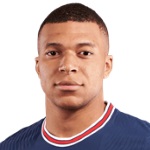 Kylian MbappéFrance20 a
 - 6
 E. JustNew Zealand20 a
 - 7
 H. KaneEngland20 a
 - 8
 K. HavertzGermany20 a
 - 9
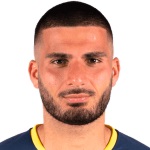 D. UndavGermany12 a
 - 10
 A. IsakSweden12 a
 - 11
 N. BrownGermany11 a
 - 12
 Hwang In-BeomSouth Korea11 a
 - 13
 V. GyökeresSweden11 a
 - 14
 R. RezaeianIran11 a
 - 15
 L. DíazColombia11 a
Latest news
Raphinha Sustains Injury, World Cup Participation Now Uncertain
Winger Raphinha has sustained an injury. This development casts doubt on his availability for the upcoming World Cup, according to reports.
Undav Double Completes Germany's World Cup Comeback Against Ivory Coast
Germany Mounts Second-Half Revival Germany secured a 2-1 comeback victory against Ivory Coast in their World Cup group stage fixture. The result, decided by two late goals from Deniz Undav, marked a crucial three points for Germany after trailing at the half. The match began with Ivory Coast establishing an early advantage. Franck Kessié found the net in the 30th minute, giving his side a 1-0 lead that they held through to the half-time whistle. Germany, despite falling behind, showed signs of their attacking intent throughout the contest. Tactical Shift and Late Drama After the interval, Germany intensified their offensive efforts, aiming to break down Ivory Coast's organised structure. The underlying statistics reflected this increased pressure, with Germany accumulating an expected goals (xG) total of 1.84 compared to Ivory Coast's 1.23, suggesting they were creating more significant scoring opportunities over the ninety minutes. The breakthrough for Germany arrived in the 68th minute when Deniz Undav struck to level the score. With momentum on their side, Germany continued to press for a winner. Undav then completed the dramatic turnaround, scoring his second goal in the 90th minute to clinch a hard-fought victory. Key individual performances highlighted the intensity of the encounter. Ivory Coast goalkeeper Yahia Fofana earned the highest match rating at 8.50, a clear indication of his efforts to thwart Germany's attacks. For Germany, match-winner Deniz Undav was rated 8.30, while Felix Nmecha contributed with a 7.50 rating. Goal-scorer Franck Kessié also registered a 7.50 rating for Ivory Coast.
New Liverpool Signing Victor Munoz Suffers Injury, World Cup Dreams Jeopardized
New Liverpool signing Victor Munoz has sustained an injury. This development could put his participation in the upcoming World Cup at risk.

New Zealand vs. Egypt: Group Stage Second Act Offers Pathway to Knockouts
The second round of World Cup group stage fixtures often defines a nation's tournament trajectory. For New Zealand and Egypt, their upcoming encounter carries significant weight, with both sides undoubtedly aiming to secure a vital advantage in their pursuit of the knockout stages. Egypt, with their blend of individual quality and tactical awareness, will likely approach this fixture with an attacking intent. Their strategy frequently leverages the pace and technical skill of players like Mohamed Salah , aiming to disorganize opposition defensive lines and create opportunities in transition. The onus will be on their creative midfielders to supply their forwards with quality service, breaking through potential defensive screens. Their ability to switch play rapidly and exploit half-spaces will be critical. New Zealand, by contrast, typically prioritizes structural integrity and defensive solidity. They will likely deploy a compact formation, aiming to deny space in central areas and force Egypt into wider, less threatening positions. Their success will hinge on disciplined defensive rotations, effective pressing triggers, and the ability to absorb pressure without conceding clear-cut chances. Any attacking threat from the All Whites will likely stem from set-pieces or quick transitions, looking to exploit any space left behind by Egypt's forward forays, particularly if Egypt commits numbers forward. Containing the Threat A key tactical battle will involve New Zealand's efforts to contain Egypt's primary attacking threats, particularly Salah. This will demand a coordinated defensive effort, likely involving a dedicated fullback receiving support from a central midfielder or wide player, to limit his ability to cut inside or run in behind. Simultaneously, Egypt will seek to establish dominance in central midfield through passing rhythm and ball retention, attempting to dictate the tempo of the game. If New Zealand can disrupt this rhythm, perhaps through aggressive man-marking or a well-coordinated pressing scheme, they could stifle Egypt's creative flow. The ability of New Zealand's central players to win second balls and quickly launch attacks will be crucial to alleviate pressure and create their own chances. This match represents a pivotal moment for both teams. A victory would significantly bolster their chances of progressing from the group, while a defeat could leave either side facing an uphill battle in their final group fixture. The tactical discipline of New Zealand against the individual flair of Egypt promises a compelling contest where fine margins will likely decide the outcome.

Netherlands Dismantle Sweden 5-1 in World Cup Group Stage Opener
The Netherlands delivered a comprehensive performance in their World Cup Group Stage encounter, securing a dominant 5-1 victory over Sweden. From the outset, the Dutch asserted their attacking intent, leaving Sweden little room to establish a foothold in the match. First Half Dominance Sets the Tone Brian Brobbey wasted no time in making his mark, opening the scoring for the Netherlands just five minutes into the game. His early goal was a result of sharp movement and effective penetration into Sweden's defensive third. Brobbey doubled his tally in the 17th minute, extending the lead and further highlighting the Dutch side's early control. Sweden struggled to contain the offensive rhythm, often finding themselves reacting rather than dictating play. The half-time whistle saw the Netherlands with a commanding 2-0 advantage, a reflection of their superior attacking output and creation of opportunities, as evidenced by an xG of 2.47 compared to Sweden's 0.94 by the final whistle. Second Half: Sustained Pressure and Individual Brilliance The second half began with the Netherlands showing no signs of letting up. Cody Gakpo quickly added his name to the scoresheet just two minutes after the restart, further solidifying the Dutch lead. He followed this with another goal in the 54th minute, showcasing his clinical finishing and the team's ability to exploit gaps in Sweden's increasingly stretched defense. These two rapid goals from Gakpo effectively put the game beyond Sweden's reach. Sweden did manage to pull one back through Anthony Elanga in the 59th minute. While it offered a brief moment of respite, it did little to alter the overall trajectory of the match. The Netherlands maintained their structural integrity and continued to press forward, seeking to convert their chances. As the game approached its conclusion, Crysencio Summerville, introduced from the bench, found the net in the 89th minute, rounding off an emphatic 5-1 victory for the Netherlands. This late goal underscored the depth of the Dutch squad and their relentless attacking mindset. Key Performers and Tactical Notes The match was characterized by the Netherlands' effective pressing and fluid attacking transitions. They consistently broke through Sweden's lines, creating high-quality chances. Individual performances were particularly noteworthy; Cody Gakpo earned the highest match rating at 9.60, a clear recognition of his two goals and overall impact. Denzel Dumfries (8.60) contributed significantly, likely through his work rate on the flank and involvement in offensive plays. Crysencio Summerville (8.50) made a telling contribution in his time on the pitch, while Brian Brobbey's two early goals set the foundation for the rout, earning him a rating of 8.20. This result firmly positions the Netherlands in the Group Stage, demonstrating their capacity for decisive attacking football in the World Cup.
Uruguay vs Cape Verde: A Tactical Test in the World Cup Group Stage
The World Cup group stage delivers a fascinating encounter as Uruguay prepare to meet Cape Verde Islands. This fixture carries significant weight for both nations, with crucial points on offer that could shape their trajectories in the tournament. Uruguay, a side steeped in World Cup history and known for its blend of technical quality and relentless intensity, will aim to establish early dominance. Cape Verde, conversely, represent an ascendant footballing nation, bringing a disciplined structure and a capacity to surprise. Uruguay's Intent and Structure Under Marcelo Bielsa, Uruguay typically operate with a high-energy, aggressive approach. They will likely seek to dictate the tempo, employing a suffocating press to win possession high up the pitch. The midfield, often anchored by players like Federico Valverde , provides both defensive steel and a powerful engine for transitions. Expect intricate passing combinations through the central channels, aiming to unlock space for their forwards. Their defensive shape, even when pressing, maintains compactness, limiting opposition routes to goal. Cape Verde's Challenge and Counter Cape Verde will likely approach this match with a pragmatic mindset, understanding the quality of their opponents. Their strategy will probably revolve around a well-drilled defensive block, designed to absorb pressure and frustrate Uruguay's attacking rhythm. Quick transitions and direct counter-attacks will be their primary offensive weapon. They possess players with pace and individual skill capable of exploiting any defensive imbalance. The collective effort and disciplined positioning will be paramount for them to contain Uruguay's offensive threats. The Decisive Tactical Battle The central tactical conflict will likely unfold in two key areas. First, Uruguay's ability to break down Cape Verde's low block will be critical. Can they create sufficient overloads and exploit half-spaces without becoming vulnerable to counters? The precision of their final ball and the movement of their attackers will test Cape Verde's resolve. Second, the midfield battle will be crucial. If Cape Verde can disrupt Uruguay's build-up and force turnovers in central areas, they could launch dangerous attacks. Uruguay’s holding midfielders will need to be vigilant against quick balls over the top or through the channels. Ultimately, this match presents a stark contrast in styles and objectives. Uruguay will be expected to push for victory, leveraging their experience and individual talent. Cape Verde will aim to demonstrate their growth on the international stage, seeking to upset predictions with resilience and opportunistic attacking. The outcome will have significant ramifications for their respective campaigns in the World Cup group stage.